
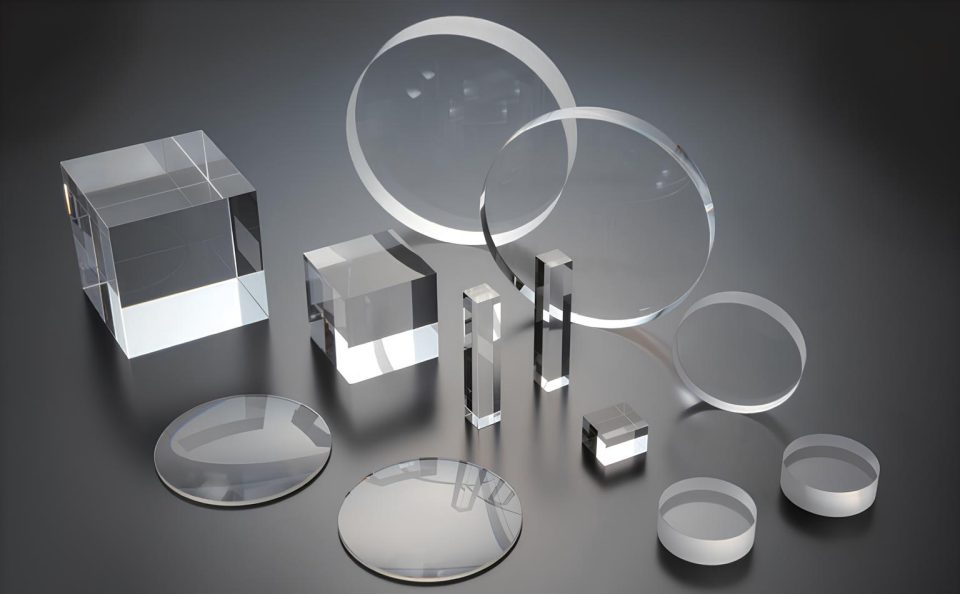
Understanding Fused Quartz: The Foundation of Its Versatility
The Science Behind Fused Quartz: What Makes It Unique?
Fused quartz, a non-crystalline form of silicon dioxide (SiO2), is celebrated for its extraordinary properties. Unlike traditional glass, which often contains various additives that can affect its behavior and stability, fused quartz is created through the melting and re-solidification of pure silica. This unique production process results in a material that is transparent to a wide range of wavelengths, from ultraviolet (UV) to infrared (IR), making it indispensable in multiple scientific and industrial applications.
At the atomic level, the structure of fused quartz exhibits a highly ordered arrangement of silicate tetrahedra, which contributes to its high thermal stability and low expansion coefficient. This means that fused quartz can withstand extreme temperatures—up to 1,000°C (1,832°F)—and sudden changes in temperature without cracking or deforming, making it significantly more reliable in high-performance conditions than conventional glass. Additionally, fused quartz has an exceptionally low coefficient of thermal expansion (CTE), typically around 0.5 x 10^-6/°C, which minimizes stress-induced fractures during thermal cycling. These characteristics make fused quartz an ideal choice for applications requiring precision and durability.
Comparative Analysis: Fused Quartz vs. Traditional Glass
Fused quartz and traditional glass may seem similar at first glance, but they diverge significantly in terms of composition, properties, and applications. Traditional glass is typically composed of silica and various oxides, such as sodium, calcium, and aluminum, which enhance its workability but can compromise its thermal and chemical resistance. In contrast, fused quartz is devoid of these additives, resulting in superior durability and performance in demanding environments.
While traditional glass can shatter under sudden temperature fluctuations and contains impurities that can absorb specific wavelengths of light, fused quartz resists thermal shock and maintains clarity across a broad spectrum of radiation. This makes it invaluable in optics and photonics, where precision is key. Furthermore, fused quartz’s exceptional chemical resistance allows it to withstand aggressive substances, making it a preferred material in chemical processing equipment, laboratory glassware, and semiconductor fabrication.
Ultimately, the choice between fused quartz and traditional glass depends on the specific requirements of the application at hand. However, for applications that demand high purity, thermal stability, and chemical resistance, fused quartz stands out as the superior option.
Applications Across Industries: Fused Quartz in Action
High-Tech Innovations: Fused Quartz in Electronics and Semiconductors
In the realm of advanced technology, fused quartz has cemented its role as a critical material in the manufacturing of electronic components and semiconductor devices, where precision and reliability are paramount. The semiconductor industry, in particular, benefits tremendously from fused quartz’s unique properties. Components such as photomasks and substrates, essential for the photolithography process, are often crafted from fused quartz due to its low thermal expansion and high optical clarity. These qualities ensure the highest accuracy in patterning microchips, which are fundamental to every electronic device we use today.
Moreover, as manufacturers strive to produce increasingly smaller and more efficient components—pushing towards the realm of nanotechnology—fused quartz continues to play a pivotal role. The growing miniaturization of circuits poses new challenges in terms of heat management and chemical compatibility, areas where fused quartz excels. Its ability to function effectively in high-temperature environments further boosts its standing in the industry. Technologies such as molecular beam epitaxy and chemical vapor deposition rely heavily on fused quartz tubes and reactors for their efficient operation, underscoring the material’s ingrained presence in modern electronics.
Healthcare Advances: The Role of Fused Quartz in Medical Devices
Fused quartz has also made significant inroads into the healthcare sector, especially with respect to medical devices and diagnostic equipment. Materials like fused quartz are favored in healthcare due to their biocompatibility, thermal stability, and ability to withstand sterilization processes. In applications such as endoscopy, surgical instruments, and analytical devices for clinical diagnostics, fused quartz is used extensively for its inert nature and high level of cleanliness.
For instance, fiber optic cables made from fused quartz are instrumental in medical imaging systems; their exceptional light transmission capabilities enable high-resolution imaging essential for procedures like MRI, endoscopy, and other non-invasive techniques. Furthermore, as personalized medicine and point-of-care diagnostics gain traction, fused quartz’s role in the microfluidic devices that facilitate rapid testing and analysis becomes increasingly critical. Given the heightened focus on patient safety and the demand for efficient healthcare solutions, the dependency on materials like fused quartz is poised for growth.
The Benefits That Set Fused Quartz Apart
Thermal Stability and Its Implications for Industrial Applications
One of the most significant advantages of fused quartz lies in its exceptional thermal stability, which is vital for a plethora of industrial applications. Industries engaged in high-temperature processes, such as glass manufacturing, metal processing, and various forms of thermal treatment, harness fused quartz for its capacity to withstand extreme conditions with ease. For instance, manufacturers often utilize quartz furnace tubes, which can operate at excessive temperatures without deforming, ensuring reliability and longevity even in the most demanding scenarios.
The thermal stability of fused quartz not only mitigates the risk of material failure but also significantly boosts productivity by reducing costly downtime traditionally associated with maintenance and material replacements. Additionally, this stability translates to improved quality and consistency of processed materials, contributing to superior finished products that meet the rigorous standards of various industries, from aerospace to automotive. The reliability and efficiency offered by fused quartz can be a game-changer for companies looking to optimize their production processes.
Chemical Resistance: Why Fused Quartz is the Material of Choice
In environments dominated by corrosive substances, the selection of materials that can withstand a wide range of chemicals without degrading is paramount. Fused quartz emerges as a leader in this domain thanks to its remarkable chemical inertness. Unlike traditional glass, which can be affected by alkalis and acids, fused quartz maintains its integrity and structural performance when exposed to harsh chemical environments. This makes it an ideal choice for laboratory apparatus, reactor vessels in chemical processing, and even for optical components in environments where chemical exposure is inevitable.
The superior chemical resistance of fused quartz not only extends the lifespan of equipment but also ensures that analytical results remain accurate and free from contamination. In research laboratories where precision is key, instruments made from fused quartz deliver reliability, safeguarding both the validity of experiments and the safety of personnel. Industries handling toxic or hazardous materials, such as pharmaceuticals or petrochemicals, have particularly benefitted from the adoption of fused quartz, as its durability and performance standards contribute significantly to safe and efficient operations.
Sustainability and Future Trends: The Path Ahead for Fused Quartz
Environmental Impact: Is Fused Quartz Truly Eco-Friendly?
The sustainability credentials of any material are becoming increasingly crucial as industries seek to minimize their environmental footprints. Fused quartz enjoys a favorable reputation in this regard due to its natural state as pure silica, which can be derived from abundant resources. Moreover, the manufacturing process for fused quartz employs minimal energy relative to more complex materials, which further underscores its sustainability potential.
Additionally, fused quartz’s exceptional durability contributes to less waste in manufacturing, as its longevity reduces the frequency of replacements. This feature aligns well with the principles of sustainability, promoting a circular economy that favors materials that last longer and require less ongoing resource expenditure. However, challenges remain, such as energy consumption in its processing and recycling efforts. As technology advances, there are promising developments in improving the manufacturing efficiency of fused quartz and potential methodologies for recycling, which could lead to a more environmentally friendly lifecycle for this versatile material.
Innovative Developments: Emerging Trends in Fused Quartz Technology
The landscape of fused quartz is continually evolving, driven by advancements in technology and the push for innovative solutions across various sectors. Recent developments in the field include the integration of fused quartz in nanotechnology and biomaterials, which opens new avenues for applications that were previously thought impractical. Researchers are exploring the use of fused quartz in conjunction with nanostructures to enhance photonic devices, which could lead to significant improvements in data transmission rates and energy efficiency in telecommunications.
Moreover, the development of specialty fused quartz materials that incorporate advanced composites or further modified silica structures is gaining traction, allowing for tailored properties that meet specific engineering challenges across industries. As industries demand materials that not only perform but are also adaptable to localized needs, the future of fused quartz looks promising. By embracing these emerging trends, fused quartz stands poised to play an even larger role in the technologies of the future.
FAQ
Question: What industries are primarily using fused quartz today? – Fused quartz is primarily used in the semiconductor industry, healthcare sector, and various high-tech industries due to its exceptional thermal stability, chemical resistance, and optical clarity.
Question: How does fused quartz compare to other materials besides traditional glass? – Compared to materials like ceramics and plastics, fused quartz offers superior thermal shock resistance, chemical inertness, and optical properties, making it the preferred choice in demanding applications.
Question: Can fused quartz be recycled? – Currently, recycling methods for fused quartz are limited, but ongoing research aims to improve recycling processes to enhance its sustainability and reduce environmental impact.
Question: Is fused quartz safe for all applications in medical devices? – While fused quartz is biocompatible and thermally stable, it’s essential to assess specific applications for safety regarding sterilization and patient interaction.
Question: How does the manufacturing process of fused quartz contribute to its properties? – The manufacturing process involves melting pure silica without additives, which results in its unique structural properties, including high thermal stability and clarity across various wavelengths.
Question: What role does fused quartz play in nanotechnology? – Fused quartz is being explored in nanotechnology for its compatibility with nanoscale structures and systems, enhancing performance in photonic devices and enabling advancements in telecommunications.
Question: Are there any emerging trends in the applications of fused quartz? – Yes, current trends include the use of fused quartz in developing specialty materials tailored for specific applications, as well as integration into innovative technological fields like nanotechnology and biomaterials.
Question: What makes fused quartz environmentally friendly? – Fused quartz is considered eco-friendly due to its natural silica source, minimal energy consumption during production, and its durability that reduces waste related to replacements in manufacturing.
Useful Resources
- ScienceDirect – A leading full-text scientific database offering journal articles and book chapters from more than 2,500 peer-reviewed journals and more than 11,000 books.
- Elsevier – Publisher of numerous scientific journals and a valuable resource for academic research in materials science.
- Springer – A comprehensive platform for research and educational materials across various scientific disciplines, including materials science.
- American Chemical Society (ACS) – A scientific society providing access to publications and resources focusing on chemistry and related fields.
- Optical Society (OSA) – A platform for the advancement of optics and photonics, offering resources related to light-based technologies.
- Materials Research Society (MRS) – A professional organization dedicated to fostering communication and collaboration among materials researchers.
- Institute of Physics (IOP) – A scientific and professional membership organization that publishes journals and provides educational resources across physics and engineering.
- Taylor & Francis Online – A leading academic publisher providing access to peer-reviewed journals across numerous scientific disciplines, including materials science.
